|
Historically, this region is said to have been Alutiiq, a type of coastal Yupik Eskimo, along with the Eyak, who speak a language somewhat similar to the coastal Tlingit Indians. The Eyak people of Cordova traditionally facilitated transactions between the Chugach people of the coast and the Athabascan people of the Interior. There were at least 8 Native villages in Prince William Sound when Captain Cook arrived in 1778, looking for the Northwest Passage. In 1790, Salvador Fidalgo, a Spaniard, explored the area. He named both Cordova and the Bay of Valdez. |
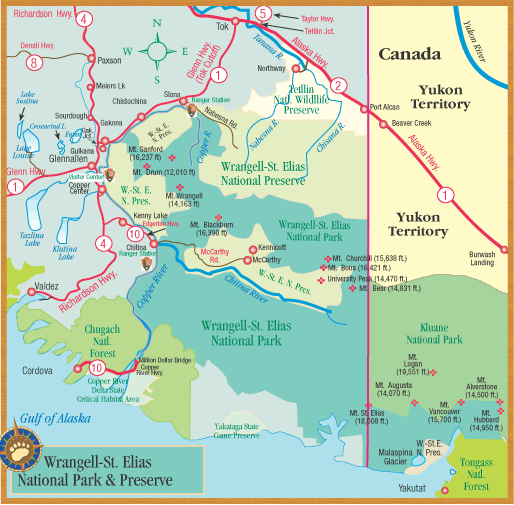
Today there still is no road to Cordova, but you can get here year-round via daily trips on the Alaska Marine highway ferry system from Valdez or Whittier, or daily jet service on Alaska Airlines and commuter Era Aviation. Cordova is a real fishing village with an active, bustling harbor. Home to world famous Copper River salmon, over a million pounds of fresh salmon are harvested and shipped each year. In addition, you can see a glacier close-up, go kayaking to nearby islands, hike on over 30 maintained trails, or view the newly renovated "Million Dollar Bridge." Sportfishing for salmon in the Copper River Delta is a popular pastime from May through October. Saltwater fishing is also available, with excellent halibut, rockfish, and salmon shark habitat in the nearby inlet and sound. During the winter Cordovans enjoy skiing on the local ski hill, ice skating on the lake, cross country skiing and snow machining on the Delta, fur trapping, and hosting world class extreme skiers who come each year to experience heli-skiing in the remote Chugach Mountains. |
Like many “unspoiled environments” it is fragile, and its health depends on the wise use of its commercial value, including fishing, logging and oil transportation. |
Prince William Sound's Coastline Was Formed by Glaciers There are 3,000 miles of coast in Prince William Sound alone. The Sound’s many fjords and islands were carved by glaciers. It’s a very deep body of water compared to the relatively shallow Gulf of Alaska. The cold arctic air cools the water surface. The cool water drops to the bottom and (in a convection current) the warmer, nutrient-laden bottom waters rise to the surface. The result is Alaska’s huge plankton bloom which supports many types of marine mammals, sea birds and fish. It also attracts the whales from warm southern seas where they over-winter. |
The
fallen span was raised in 2005. However, the road to the bridge has
suffered damage in recent years, making the bridge currently
inaccessable by automobile. |
The Childs Glacier is over 300 feet tall, and often has quite active calving. |
A trestle spanning a steep ravine of the CRNW Railway that ran from Kennecott to Cordova rounds a bend. There has been talk of resurrecting this section and turning it into a road, somewhat like the McCarthy Road. The Copper River brings tons of nutrient-rich soil from the Interior into the Copper River Delta each year. These nutrients create an ecosystem which supports the marine life of the North Gulf Coast and the a bundant wildlife habitat of the Delta. In return, the rivers and streams of the Interior provide the spawning waters for ocean-going Copper River King, Red, and Silver salmon. |
Cordova is host to a number of activities throughout the year, including the Iceworm Festival, Shorebird Festival, Wild Salmon Festival, Bearfoot Bluegrass Festival, Sobriety Celebration, and the Christmas Kickoff Celebration. (Photos, Cordova Chamber of Commerce, PK & Julia)
|


 Getting to Cordova


 Importance of the Alaska Interior


|
|||
|
|||
|
 In Cordova, Don't Miss...
 Became a household
phrase during 1989, when its waters were polluted by
Became a household
phrase during 1989, when its waters were polluted by 

 ALASKA 101
 BEARFOOT GUIDES
 DENALI 101