
 |
Those Harbor Lights Valdez has twice been named an “All-American City.” It has pleasant surroundings, access to mountains and water, and friendly residents. You’ll find Valdez was made for strolling. This is an excellent place to stay for several days, walking about town. You can go fishing, take a glacier cruise, and just relax from your travels. |
Cold As Ice
Worthington Glacier has been retreating into the mountains over the past decades. Old postcards of the glacier show the rapid pace. Like all glaciers, this one has falling rocks and crevasses. Don’t try to climb it. |
At many times, you're following an historic route. The Eagle Trail was built to connect Fort Liscum in Valdez to Fort
Egbert in Eagle. It follows a telegraph line that was maintained along the route, at times running from tree to tree. The Trans-Alaska Pipeline now follows the Richardson along a closely related route. |
Gold shipments, frozen eggs, and even an entire riverboat, dragged piece-by-piece, were hauled over Thompson Pass by the early gold miners with horses in the winter. Nowadays, the road over the pass to Valdez is wide and safe. The glaciers are still there, though some are melting at a fast enough clip to be clearly seen by local residents. |
The Lowe River has cut a spectacular canyon through the rocks on its way to the ocean at the head of the bay in Valdez. A series of beautiful waterfalls cascades down the sides of Keystone Canyon into the river. There are several pullouts where you can take pictures. |
Many tourists stop to take a picture at Bridal Veil and Horsetail Falls on their way into Valdez at Keystone Canyon. In the winter, the frozen falls are scaled by daredevil ice climbers (enlarged right). |
Stop at the visitor center downtown for information on where to go and what to see. They have guidebooks, maps, lists of places to stay, and where to eat. You can also get a lot of tips from RV campground visitors and operators, who can help you book your glacier tours. |
It has neighborhood schools, a city hall, a hospital, a library, a civic center, the Pipeline terminal, two museums, a fire department, a community college, swimming pools and parks. |
Valdez is Alaska’s northernmost ice-free port. But, during the last ice age, huge glaciers came down from the Chugach Range and covered not only the Copper Valley to the north, but all of Prince William Sound, which is also accessible by Cordova and Whittier/Portage. When the ice age came to an end, the glaciers retreated across Prince William Sound into the fjords, where you can view their dynamic cycle today. |
Bad Luck on Bligh Reef
Cook explored the Prince William Sound area, which includes Cordova and Whittier, and he named Bligh Reef after his protege. In 1989, when the oil tanker Exxon Valdez ran aground on Bligh Reef, the resulting oil spill was, among other things, a tragic reminder of Captain Bligh’s bad luck. |
You’ll see the Trans-Alaska Pipeline oil terminal across the harbor in Valdez. From 1900 to 1923 this was the site of Fort Liscum, and was used to monitor the gold rush miners. The fort was also a base for construction of the military road to Interior Alaska. |
The original trail through Keystone Canyon was called the “Goat Trail.” It is still visible, high on the mountain walls as you enter Valdez through Keystone Canyon beside the Lowe River.
You can hike the Goat Trail by starting in Keystone Canyon, and following it for around 2 miles. Ask for a map at the visitor center. You can also see the old highway tunnel, which has been replaced by bridges. A second, partially completed tunnel was the scene of an early 1900’s shoot-out. The shoot-out occurred when proponents of the Cordova-to-Chitina railroad confronted and stopped a competing effort from Valdez. |
The Whitney Museum at Prince William Sound Community College (303 Lowe Street) features Native dolls, beadwork, baskets and prehistoric artifacts as well as trophy class mounts of Alaska's big game animals. The Valdez Museum, downtown, has extensive displays on the region’s history, including the gold rush, the 1964 Earthquake, and the Trans-Alaska Pipeline. |
There’s an underwater video camera at the Crooked Creek U.S. Forest Service information center, as you enter Valdez. Salmon spawn right in the creek, so you can get a fish-eye view. |
• ANNUAL FISH DERBY • HALIBUT DERBY • SILVER SALMON DERBY • FOURTH OF JULY CELEBRATION • GOLD RUSH DAYS |
When the pinks are running in July, the whole town goes over to Allison Point when the tide is coming in. To get to Allison Point, drive out of Valdez about three miles, turn right onto Dayville Road, and drive about 5 miles. If you aren’t sure if the fishing is hot, count the cars with Alaska plates. Or just look for fish splashing the water. Pink salmon make for a fine supper. Many campers smoke them. Pinks are also called “humpbacks.” |
If you don’t feel like moving your RV and driving, you can just walk to the city dock. This dock is not at the Small Boat Harbor. It’s near the ferry terminal. Ask a local person for directions. When the tide is rising and the fish are coming in, you’ll find the fishing from the dock is just fine. |


 Headed South?

 Thompson Pass


 Valdez Folks Will Help You Find Your Way
 An Ice-Free Port


 Watch Salmon Spawn
  Valdez Events

|

Dueling businessmen, feuding over railroads, shot it out in a Keystone Canyon tunnel. |
Traveling Around Valdez In 1900, Natives from the nearby village of Tatitlek were photographed in Valdez Harbor by P.S. Hunt, paddling their baidarkas. In 1905, Ford Motor Company sent a touring car to Valdez on the SS Bertha, and P.S. Hunt took a photo of that, too. (Photos, Dorothy Clifton Collection & Anchorage Museum of History & Art) |
This gold rush cemetery was used in Valdez between 1898 and 1917. It’s 1.5 miles out of town, down a gravel and dirt road. There are picnic tables and a great view of the bay. |
Owen Meals (as in Meals Avenue) an energetic citizen of Valdez, flew the “Spirit of Valdez” in 1927. |
Silver Salmon – The silver salmon is often called a “coho.” They live in both salt and fresh water, so you might find yourself catching one in a small lake in the Copper Valley, as well as in Valdez Bay. The ones you’ll find in Valdez are pretty big. They’re at least 8 to 10 pounds apiece, and 24 to 30 inches long. But every year, some really big ones are caught, weighing close to 20 pounds or more. In salt water, they’re bright silver with small black spots on their back. They have a delicious white flesh. |
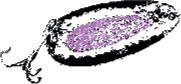
Use it for catching salmon from the shore. The color doesn’t really matter, but the size does. You can cast a heavier lure farther. Use smaller sizes for pinks, and larger sizes for silvers. Ask at your RV park or a local tackle shop. Or go over to the dock to see what other people are using. If you’re on a charter boat, the captain will provide your gear.
|
Watching the Tide Roll In
The difference between high tide and low tide in Alaska is great. This is why the Small Boat Harbor has such long ramps, and the docks are allowed to float up and down. There are two high and two low tides every day, so you can see the dramatic changes yourself. If you’re boating, you’ve got to be aware of tides when you anchor your boat, or pull it up to shore, because you can either find your boat stranded, or floating away. Some people say that fishing is better when there is a big tide, but whether or not this is true, it is certainly true that when you are fishing from the shore on an incoming tide in Valdez you’ll have much better luck. So you should plan your fishing expedition so you’re fishing a couple of hours before high tide. Tide books are available around town. |
Can you tell the difference between a raspberry and a salmonberry? In Interior Alaska, raspberries are tiny, low plants growing along arid roadsides. Salmonberries are large, delicious berries that grow in wet coastal regions, and look like enormous raspberries. Their fruit is red or pinky-orange. |
When you’re fishing in small lakes or streams, for grayling or dolly varden, clip the barb off your hook so you can easily
release a small fish without hurting it. |
A lot of visitors have eaten halibut, but if you’ve never caught one, you’re in for an adventure. These funny-looking fish are caught from charter boats that take you out into Prince William Sound. Halibut are white on one side (the bottom) and olive to dark brown on the other. When they’re about an inch long, they have an eye on each side of the head. Then the left eye moves around to the right side of the fish. So the halibut winds up with both eyes on the pigmented side, which faces up. This way they blend in with the ocean bottom. Halibut are the largest flat fish, and they can grow to over 400 pounds. Because they get so big, your charter operator will give you heavy duty tackle, and at least 60 lb. line. Halibut are commonly fished with octopus or herring as bait. Halibut fishing starts in mid-May and Prince William Sound is a good place to catch them because the waters are more sheltered than the Gulf of Alaska. |
You often see pictures of people with a monster 300-lb. halibut, but you’re more likely to catch a smaller one – and you’ll find they make great eating. A 35 to 40 inch halibut will weigh about 30 lbs., and will be around 10 years old. A 100 lb. halibut is about 5 feet long. If you catch a halibut you don’t want to keep, you can release it, if you handle it carefully, because halibut don’t have a swim bladder, so changes in water pressure don’t kill them. |
Valdez hosts a popular fish derby every summer. The derby rules, standings, and prizes are posted near the waterfront downtown, and there are derby weigh stations in Valdez. There are fishing derbies, including a halibut derby and a silver salmon derby, with many thousands of dollars worth of cash and prizes. You’ve got to buy your ticket before you go fishing – and check out the rules. This is one of the state’s most popular fish derbies. |


 Spirit of Valdez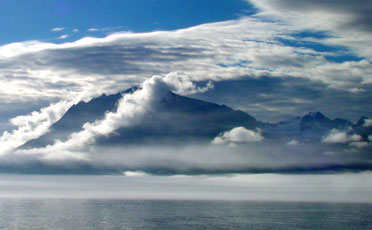

 Raspberry...
Or Salmonberry?
Raspberry...
Or Salmonberry?


|
|||
|
|||
|
|||
|
|||
|
|||
|
|||
|
|||
|
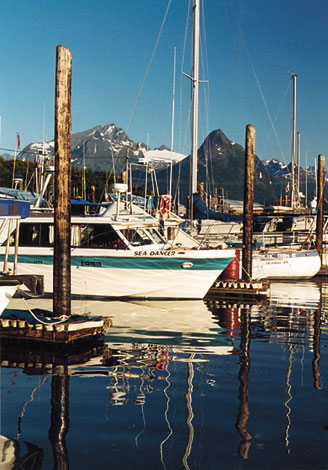

 Pop: just over 4,000
 Thompson
Pass is 26 miles from Valdez
Thompson
Pass is 26 miles from Valdez


 There
were two ways to make money in the Gold Rush. One was to dig gold out
of the ground, and the other was to sell provisions to miners.
There
were two ways to make money in the Gold Rush. One was to dig gold out
of the ground, and the other was to sell provisions to miners.


